Often, May arrives with a mix of lingering spring weather and longer, brighter days that suddenly push plants into rapid growth. One week it’s raining, the next, it’s 75 and sunny. As that shift begins, I always make sure my soil is well-fed because I know the garden is about to take off.
One of the most common mistakes I see is underfeeding early in the season and only fertilizing once plants begin to show signs of stress. Many gardeners are afraid of over-fertilizing, while others assume compost alone will carry the entire season. In organic gardening, there can be a belief that adding fertilizer is somehow less natural.
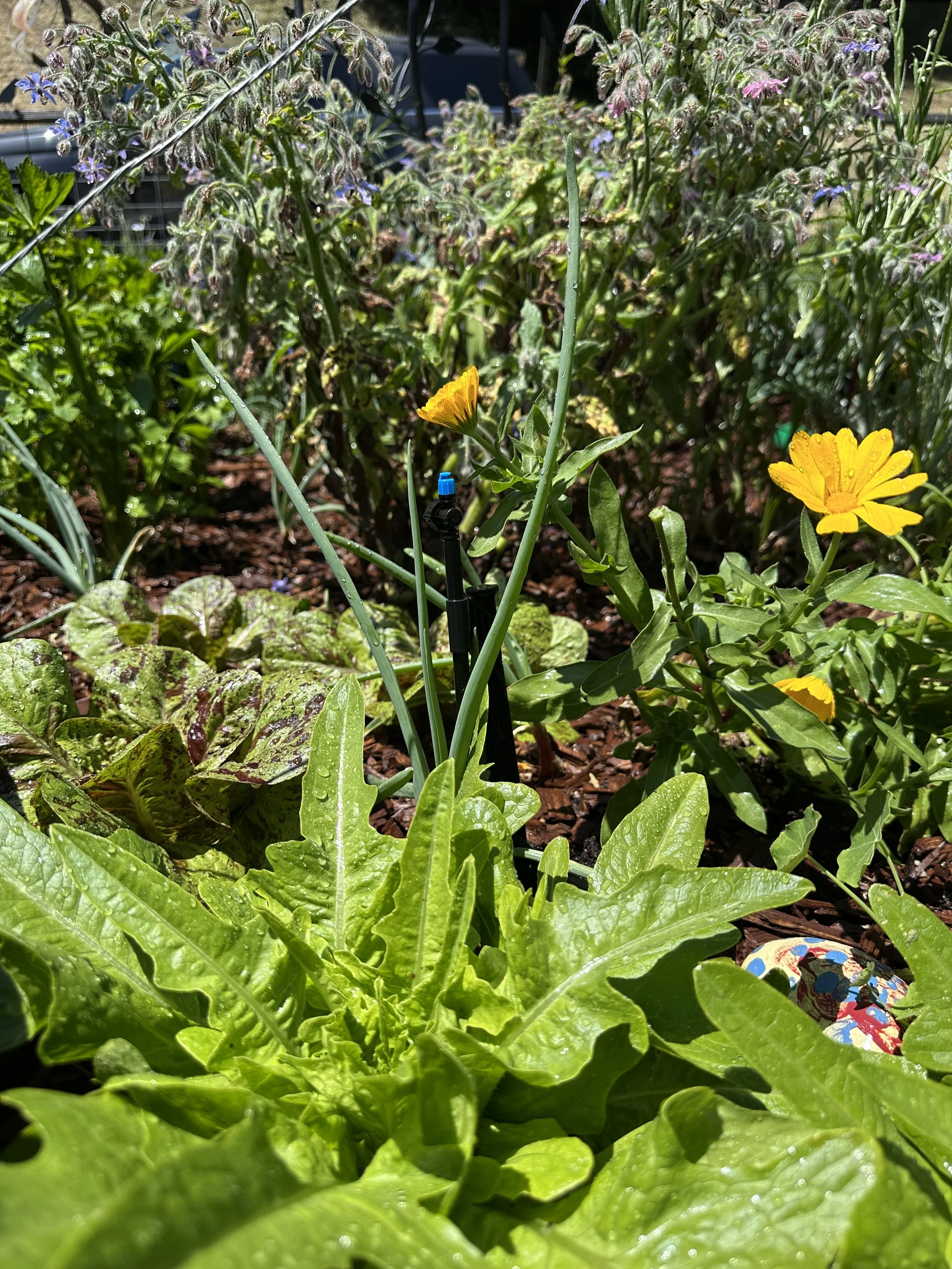
Healthy Lettuce and Flowers
Feeding the soil is not forcing growth; it is supporting it. Organic fertilizers work best when applied ahead of peak demand because they rely on soil biology to break them down gradually. With readily available nutrients, microbes can process them immediately and build the root system as the plant expands. The biological process is already behind if you wait to fertilize when plants are stressed.
Compost is wonderful and essential for soil health, but most finished compost averages only about 1-1-1 in N-P-K value. That’s the ratio I use for tiny seedlings in my greenhouse, not for larger starts or to give a good boost early in the season. Heavy feeders like tomatoes, peppers, squash, and onions demand more as they build foliage, flowers, and eventually fruit. Without adequate nutrients early on, those crops may grow, but they rarely reach their full potential.
Here’s my simple way of remembering the N-P-K ratio:
· N = Nitrogen → Green Growth
· P = Phosphorus → Roots and Blooms
· K = Potassium → Health and Hardiness
Nitrogen fuels leafy growth. Potassium strengthens cell walls, supports water regulation, and improves stress tolerance. But during May, or an establishment phase, phosphorus plays a critical role.
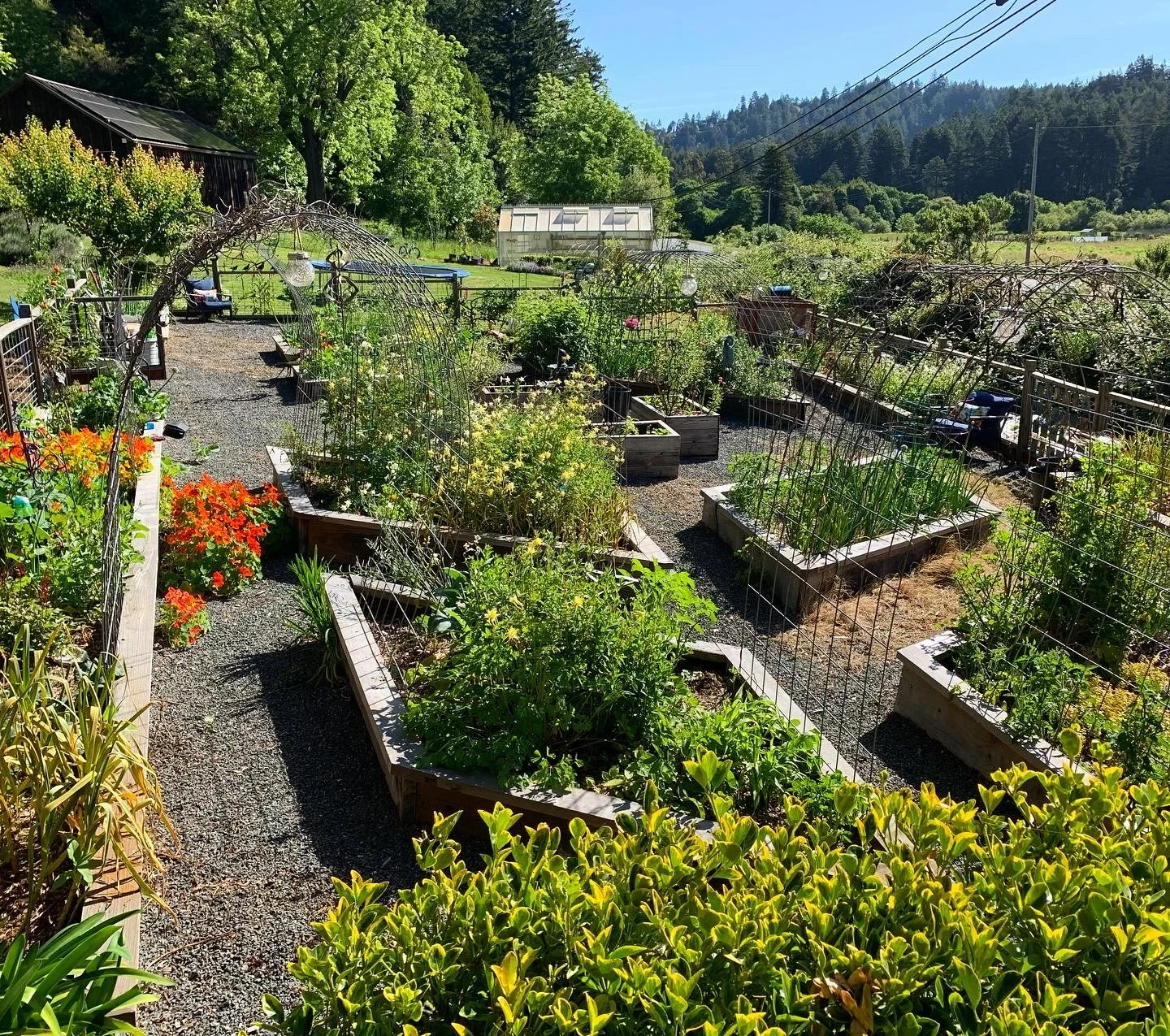
May Garden Off to a Good Start
Phosphorus drives root development. In the early stages of plant growth, root systems are forming rapidly. If nutrients aren’t immediately available, the plant builds a smaller foundation. You can’t get that time back. Later in the season, root growth does continue, but it competes with leaves, flowers, and fruit for energy. Once flowering and fruiting begin, the plant must direct much of its energy upward. Root expansion slows because reproduction becomes the priority. Have you ever pulled a plant at the end of the season and been surprised at how small the root ball was? Or noticed that the roots never branched far from the base? Often, it’s the same plant that struggled to produce well. Strong early root development determines how well a plant performs later in its life. It directly affects how deeply it can draw water during heat, how efficiently it absorbs nutrients, and how resilient it remains under stress.
In organic gardening, phosphorus often comes from bone meal, fish bone meal, soft rock phosphate, or composted poultry manure. I typically sprinkle a small amount of bone meal into the planting hole for new starts or seeds. A little goes a long way, and because phosphorus does not move easily through soil, it needs to be incorporated where young roots will encounter it.
It’s also important to avoid over-applying phosphorus year after year. Unlike nitrogen, which can leach away, phosphorus binds tightly to soil particles and accumulates over time. A light, well-timed application into the root zone is usually sufficient, and I only apply it once in May. If you’re unsure about levels of phosphorus in your soil, a simple soil test every few years will prevent unnecessary amendments.
Strong growth starts below the surface, so when nutrient-rich soil is available from the beginning, plants establish deeper roots and require far less intervention later. Don’t wait for a problem to tell you what your soil needed weeks ago.
Happy Gardening!