In my opinion, an onion a day keeps the doctor away (possibly friends too?), and this is the perfect time to consider planting them in your garden. I often hear from gardeners that they can grow just about everything except onions. I think it takes a little knowledge up front to understand the way the bulb forms, and once you get it, you’ll be successful year after year. Onions fail when gardeners misunderstand timing, not because onions are difficult to grow.
Onions require a certain amount of light each day to form a bulb, and you must grow the right type of onion for your area. There are three types: long-day, short-day, and intermediate-day varieties. For our region, it’s best to grow intermediate-day onions. Here’s why. When we plant an onion from a set or start, the green growth must happen first. This is called the vegetative stage, and each green leaf produced later becomes one ring (layer) of the onion bulb. For example, if you have seven leaves, you’ll have roughly seven layers in your onion. While our days are relatively short on light, onions focus on leafy growth. As daylight increases to about 12–14 hours, that change naturally triggers the bulb to form.
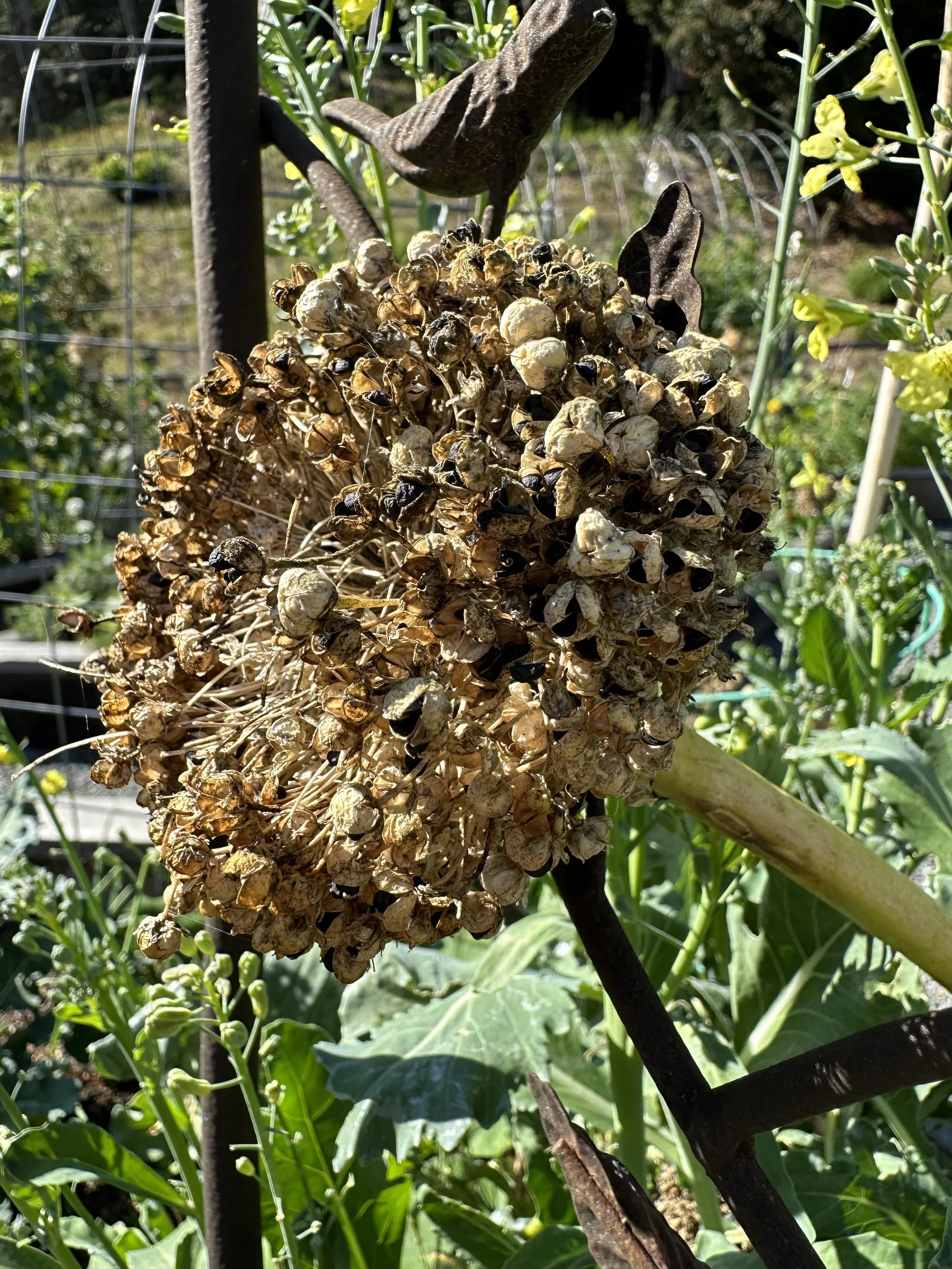
Onion Seed Head
Another common problem is planting in the fall. When I moved here, I kept planting onions in November, because I thought it would give them a jumpstart during our mild winters. Instead, I kept ending up with leafy growth and emerging flower stalks in January. Digging down, there was only a tiny bulb. If you’ve had this happen, you know that once a flower emerges, it’s over. You can’t cut the flower and hope the bulb will start forming. Cutting flowers off in crops harvested for leaves or stems helps prevent them from going to seed, but not for onions, because the bulb is finished by the time flowering begins.
Onions are biennial, meaning they naturally flower in their second year after experiencing a cold period or vernalization. If young onion plants are exposed to prolonged cold (below ~45–50°F) too early, the plant thinks it’s had a winter. When it experiences a few weeks of warmth, the plant behaves as if it’s in year two and sends up a flower stalk. When I planted in November, there were too many opportunities for my onions to experience cold, resulting in many seed heads. If you want a cheap way to produce seed, try some onions in the fall. Each seed head contains 150+ seeds. It gave me so many that I was able to experiment for years, figuring out the timing of planting.
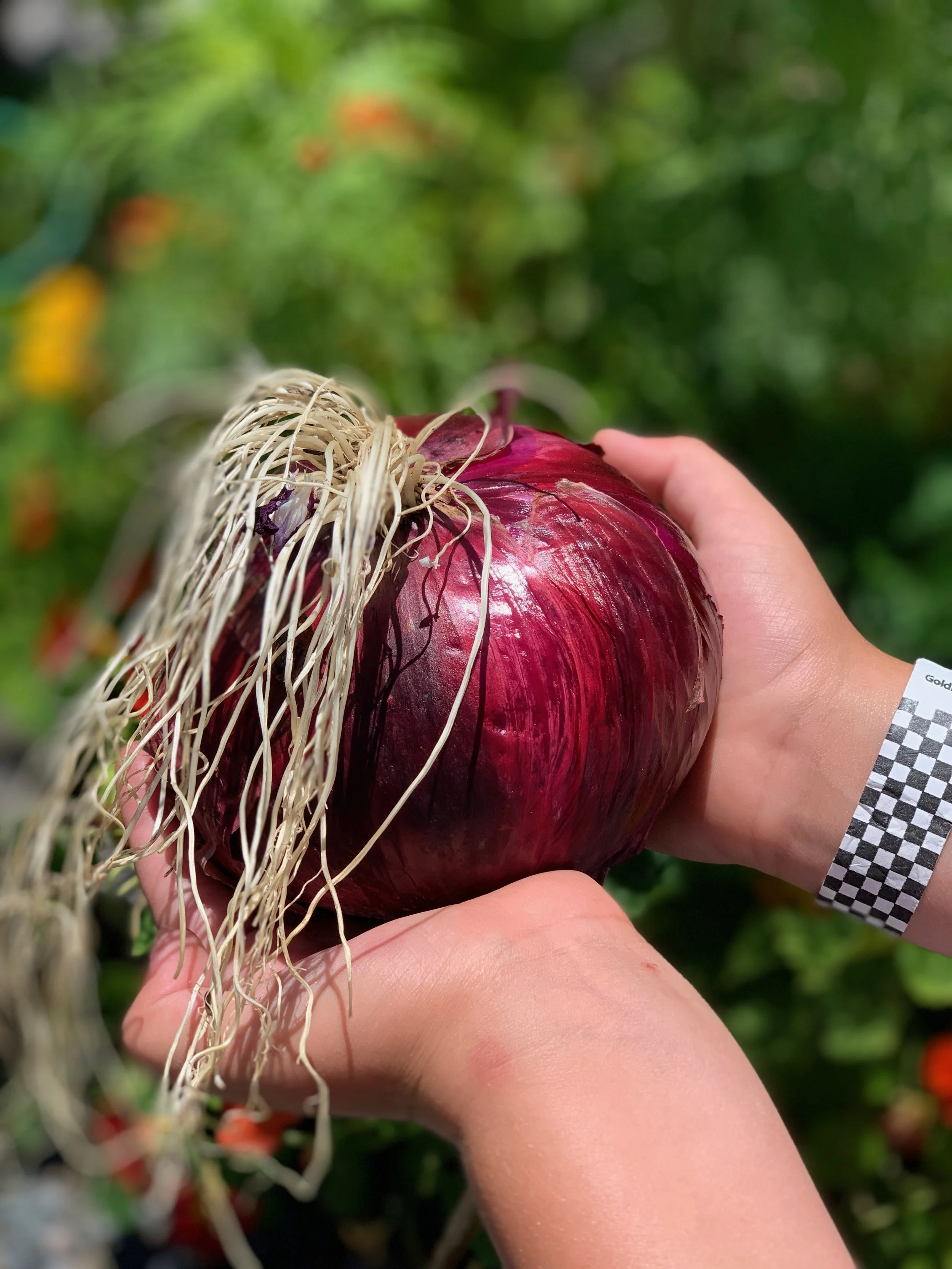
Enormous Candy Apple Onion
April is the ideal month to transplant onions because we are past any prolonged cold snaps. I have had great success with these Intermediate-Day Varieties:
Candy – sweet, yellow, large bulbs, easy to grow
Super Star – white hybrid, fast-growing
Red Candy Apple – beautiful, red-skinned onion (my FAVE!)
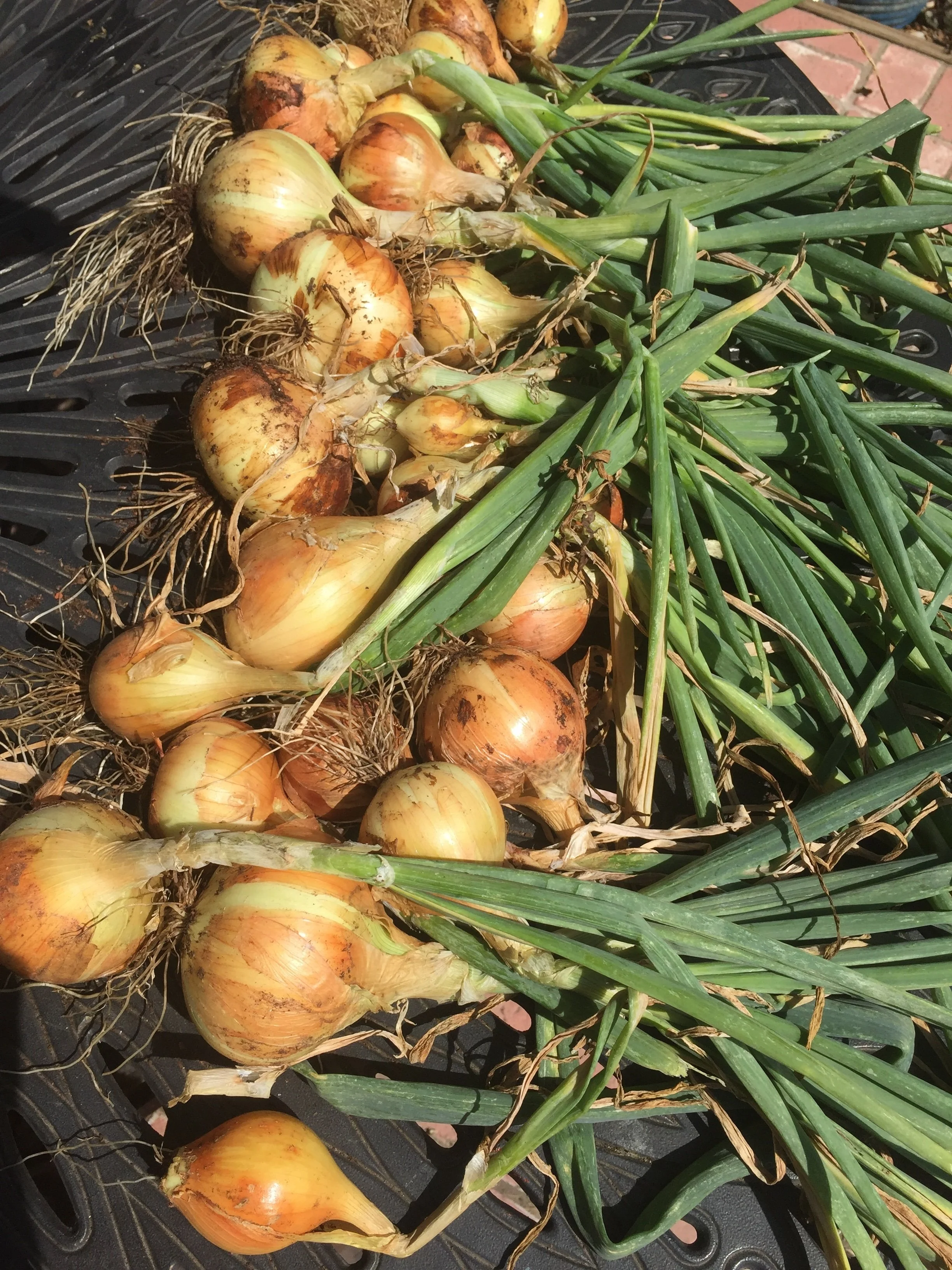
Freshly Harvested Sweet Onions
Once your onions begin to bulb and summer sets in, monitor their tops. Harvest when they begin to yellow and fall over, then dry naturally, typically in mid to late summer. I like to gently squeeze the stalks, and if they give easily or are floppy, I know the onions are ready to harvest. From there, stop watering and let them dry out in the soil to begin the curing process. After a few days, I gently remove them and place them in a shady area of the garden. You can store them in the garage, a shed, or somewhere out of the sun for about 2-3 weeks, or until the neck is completely dry.
Once cured, trim the tops to about an inch and cut the roots short. Store in a cool, dark, well-ventilated place. As with garlic, you might find that home-grown onions are more potent and a little goes a long way.
Happy Gardening!